BetterSleepAfter40
Evidence-Based Sleep & Wellness Since 2017
BetterSleepAfter40
Evidence-Based Sleep & Wellness Since 2017
You are reading: SLEEP HEALTH & SNORING RELIEF › Sleep Breathing Research
SLEEP HEALTH RESEARCH
Can't Fall Asleep Anywhere Without Snoring?
Many people assume snoring starts in the nose. But sleep experts are paying closer attention to another factor that may be affecting nighttime breathing, sleep quality, and even how rested you feel in the morning.

By Dr. James Holloway, Sleep Health Specialist
6 min read
By Dr. James Holloway, Sleep Health Specialist
6 min read
Stock: Shutterstock / Unsplash.
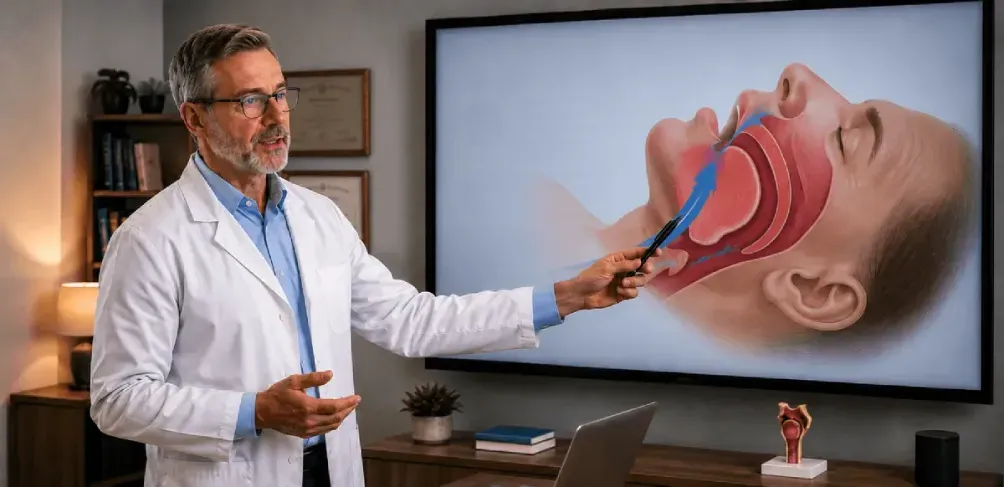
Photo: A common morning experience for the 90 million Americans who snore on a regular basis.
For years, people have relied on nasal strips, mouth guards, special sprays, and countless nighttime routines hoping to reduce their snoring.
Yet many continue waking up tired, disturbing their partner, and wondering why nothing seems to make a lasting difference.
What surprised some sleep specialists is that in certain cases, the issue may involve something most people rarely consider: the position of the head, neck, and upper airway during sleep.
More than 90 Million Americans
snore on a regular basis. And the vast majority of them have tried at least one "solution" that didn't work: the nasal strips, the chin straps, the special pillows from the drugstore, the advice to "sleep on your side" or "lose a few pounds."
If you're reading this, those solutions probably didn't work for you either.
If you're reading this, those solutions probably didn't work for you either.
⚡ Still waking up exhausted from snoring? See the sleep solution that's helping thousands sleep quietly again — check current availability below.
Why does it keep happening — and why do most common solutions fail to fix it?
Many people spend years trying nasal strips, mouth guards, sleep apps, white noise machines, and countless nighttime routines hoping to reduce their snoring.
But what surprised many sleep specialists is that in some cases, the issue may have less to do with the nose and more to do with how the head, neck, and upper airway are positioned during sleep.
That's why more people are paying attention to a simple sleep-support solution designed to help maintain a more natural sleeping position throughout the night.
See the sleep solution many people are now using to enjoy quieter nights and more comfortable sleep.
One sleep-support product that has been getting attention recently is the Derila Ergo Memory Foam Pillow.
Unlike traditional pillows that simply support the head, its ergonomic design was created to help support the natural alignment of the head, neck, and upper airway during sleep.
Many users report that after switching from a traditional pillow, they experienced quieter nights, improved sleep comfort, and fewer interruptions caused by nighttime breathing issues.
While results vary from person to person, the growing popularity of ergonomic sleep-support pillows has encouraged more people to explore whether their current pillow could be contributing to their sleep problems.
Stock: Shutterstock / Unsplash.
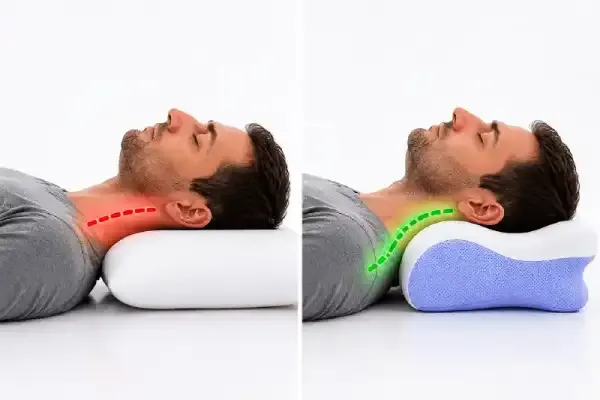
Fig. 1 — Cervical alignment: standard pillow vs. ergonomic contoured support.
Over 4 million couples in the United States now sleep in separate bedrooms because of snoring. Many of them describe it as one of the most quietly damaging things in their relationship — not dramatic, not explosive, just a slow erosion of closeness and shared rest.
The question isn't whether snoring is a problem. It clearly is.
The question is:
Why does it keep happening — and why do most common solutions fail to fix it?
The position of your head and neck while you sleep:
Many people assume snoring starts in the nose.
But sleep researchers have found that the position of the head, neck, and upper airway during sleep may also play an important role.
When the airway becomes more restricted, airflow can become less consistent, which may contribute to louder nighttime breathing sounds.
This is one reason why more people are looking beyond traditional snoring remedies and paying closer attention to how they sleep.

"Most people who struggle with chronic snoring don’t realize the issue often has less to do with the nose — and more to do with how the airway collapses during sleep. By the time they come to me, they’ve already tried nasal strips, mouth tape, and every ‘snoring hack’ they could find online."
By Dr. James Holloway, Sleep Health Specialist
If you're tired of waking up exhausted, disturbing your partner, or wondering why your snoring keeps getting worse, it may be worth taking a closer look at what could be happening while you sleep.
Many people are surprised to discover that a simple change in nighttime support can make a noticeable difference in their overall sleep experience.
The result for most users is a significant reduction in snoring — often from the very first night — without any device, medication, or behavioral change required.
What Users Are Saying
"My husband has snored for as long as I can remember. I've been sleeping with earplugs for three years. A friend told me about this pillow, and honestly, I ordered it more out of desperation than hope. He's been using it for six weeks. The snoring is maybe 20% of what it used to be. I cried the first morning I woke up and realized I'd slept through the night."
★★★★★ -- Linda K., 45, Georgia
"I've tried two different mouthguards, nasal strips, and an anti-snore pillow from a pharmacy. Nothing worked. My wife was sleeping in the guest room and we were both miserable. This is the first thing that's actually made a difference. She's back in our bed and I wake up feeling like I actually slept."
★★★★★ -- Thomas H., 49, North Carolina
"I didn't think a pillow could stop snoring. Seemed too simple. But after two weeks of using this, my wife recorded me sleeping — and I barely made a sound. She said it was the best night's sleep she's had in years. I feel better too. More rested than I've felt in a long time."
★★★★★ -- Robert M., 56, Arizona
One reason many people feel comfortable trying ergonomic sleep-support products is that they can evaluate the difference for themselves over time.
Rather than relying on another temporary nighttime remedy, many users prefer a solution they can test in their own sleeping environment and compare directly with their previous pillow experience.
That allows them to decide whether the improvement in comfort and sleep quality is meaningful for their personal situation.
Maintains the natural curve of your cervical spine in both side and back sleeping positions
Releases tension from shoulder muscles by providing targeted support at the shoulder arch
Keeps your airways open and properly aligned, reducing snoring and improving overnight oxygen recovery
Prevents the "sinking" effect — high-density foam holds its shape through thousands of hours of use
The Specific Pillow Getting Attention From Sleep Specialists
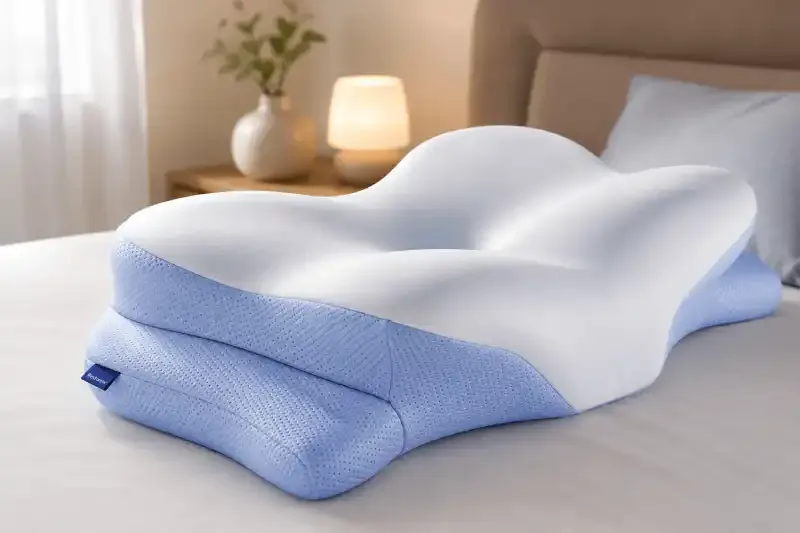
Derila Ergo Memory Foam Pillow
Ergonomic Design
High-Density Foam
70% OFF Today
60-Night Trial
Designed specifically around the principles of cervical alignment, this pillow is currently available with a significant discount and a full 60-day money-back guarantee. Either it works — or you return it and pay nothing.
Ready to Let Your Partner Sleep Again?
Join thousands of Americans who've made the switch — and finally understand what a well-rested morning feels like.
🔒 Limited time offer — 70% OFF + Free Shipping + 60-Day Money-Back Guarantee
Still skeptical?
If you're curious whether your current pillow could be contributing to your nighttime snoring and sleep discomfort, you can learn more about the ergonomic sleep-support approach many people are exploring today.
On the next page, you'll see additional information about how the Derila Ergo Memory Foam Pillow is designed, what makes it different from traditional pillows, and why so many people have decided to make the switch.
Take a look and decide for yourself whether it may be a good fit for your sleep needs.
✓ Free Shipping · ✓ 60-Day Guarantee · ✓ Secure Checkout
Disclosure: This article may contain affiliate links. We may receive a commission if you purchase through our links, at no additional cost to you. Our editorial evaluations are independent of commercial relationships. This content is for informational purposes only and does not constitute medical advice.
© 2026 emilycarterwelness.com · Independent Sleep & Wellness Research · Privacy Policy · Affiliate Disclosure