HonestSleepJourney
Real people. Real results. No fluff.
HonestSleepJourney
Real people. Real results. No fluff.
You are reading: SLEEP HEALTH & BETTER BREATHING › Sleep Apnea Research
MY PERSONAL STORY
"I Was Waking Up Every Morning With Lower Back Pain After Long Hours Sitting at Work. I Tried Something Different First — and I Couldn't Believe The Difference."
"I'm not against stretching routines, massages, or other approaches. Many people find temporary relief with them. But after weeks of trying different things without lasting results, I discovered a nighttime support approach that made a real difference — and here's my personal experience with what happened."

Michael M.
Regional Sales Manager · Nashville, Tennessee · Married 26 years
✍️ Personal Story — Not a Medical Professional
7 min read
Michael M.
Regional Sales Manager · Nashville, Tennessee · Married 26 years
✍️ Personal Story — Not a Medical Professional
7 min read

Photo: A common morning experience for millions of office workers who wake up with lower back pain and stiffness after long hours sitting every day.
I Thought I Was Just “Getting Older.” The Truth Was Something Completely Different.
I'm going to tell you something I'm a little embarrassed to admit.
For almost three years, I knew something wasn't right with my lower back — and I did nothing about it.
I'm Michael. I'm 54 years old, I work as a regional sales manager in Nashville, Tennessee, and I am, as my wife will happily confirm, the kind of person who doesn't go to the doctor unless something is visibly broken.
The signs were all there. Every morning I woke up with lower back stiffness. I felt constant tension after spending long hours sitting at work. Some days I'd stand up from my desk and feel like my back needed several minutes just to loosen up.
By the afternoon I was stretching constantly. I kept shifting in my chair trying to get comfortable. Long drives felt uncomfortable. Sitting through meetings felt uncomfortable.
I told myself it was stress. It was the job. It was getting older. It was life.
My wife, Karen, knew better.
She'd been watching me come home every day and complain about my lower back for years.
1
How It Started
It was a Tuesday evening about eighteen months ago.
I had just come home after another long workday.
I remember spending almost the entire day sitting — meetings, emails, phone calls, and hours in front of my computer.
By the time I got home, my lower back felt tighter than usual. That wasn't strange anymore. I had gotten used to it.
After dinner I sat down on the couch for a while and when I finally stood up, I felt a sharp stiffness in my lower back.
I remember placing my hand there immediately.
My wife looked at me and said:
"Michael... you do that every single day."
Honestly, I didn't even realize I was doing it anymore.
Every morning I woke up stiff.
Every afternoon I stretched.
Every evening I complained about my back.
It had become so normal that I stopped questioning it.
She made me promise I would finally start paying attention to it.
And for once in my life, I didn't argue.
$3,200+ / year
Between chiropractic appointments, ergonomic office equipment, massages, and temporary fixes, my lower back discomfort quickly became an expensive problem.
I started getting up constantly and walking around the house because sitting or staying in the same position for too long made my lower back feel worse.
⚡Sound familiar? See the pillow Michael says helped him wake up with less lower back discomfort — or return it within 60 nights for a full refund.
2
Everything I Tried
(And Why It Didn't Last)
My primary care doctor suggested I take a closer look at my lower back discomfort and posture habits — especially after spending years sitting for long hours at work and waking up stiff almost every morning.
"I started paying closer attention to my lower back discomfort and posture habits after years of sitting for long hours every day."
Which meant I was spending hours every day placing repeated stress on my lower back without really realizing how much it had been building up. Day after day. Week after week.
The doctor explained what that meant: every long workday sitting at a desk, every hour in the same position, and every night of poor support could continue adding pressure and tension around my lower back. Not enough to immediately stop me from functioning — just enough that my body never seemed to fully recover. Day after day after day for years.
That explained everything.
The morning stiffness.
The constant tension.
The discomfort after sitting too long.
The feeling of never being fully comfortable no matter how many times I changed positions.
The first recommendation was straightforward: stretching routines, posture adjustments, and improving how my body was supported during rest.
I went home, researched everything I could find, and started trying it.
Why Everything I Tried Failed for Me
I want to be clear: stretching routines, massages, and ergonomic adjustments can help. For many people dealing with lower back discomfort, they may provide relief and improve comfort.
But for me, it became weeks of frustration.
The routines themselves weren't the worst part — though constantly stretching, adjusting my chair, and trying different things every day became exhausting. The worst part was realizing that the relief never seemed to last.
I'd feel slightly better for a few hours.
Then I'd sit through meetings, answer emails, spend hours in front of my computer, and by the end of the day the tension would slowly come back again.
Some mornings I'd wake up feeling okay.
Other mornings I felt like I had done absolutely nothing the night before to recover.
My follow-up appointment wasn't exactly encouraging.
The recommendations changed.
Try different stretches.
Adjust my desk.
Use a different chair.
Pay closer attention to posture.
The advice was helpful and everyone was genuinely trying to help.
But then something was mentioned almost casually that stayed with me.
I was told that for people who spend long hours sitting every day, what happens during sleep may also play an important role. That poor nighttime support and spinal positioning may continue affecting how the body feels the next morning.
I went home that night and started researching spinal support and sleep positioning.
3
What My ChatGPT Told Me
The Research That Changed Everything
What I learned over the next several evenings completely changed how I thought about the whole problem.
The research around posture, spinal support, and lower back discomfort was surprisingly interesting.
I kept discovering that many people who spend long hours sitting every day may unknowingly continue placing stress on their bodies even while they sleep.
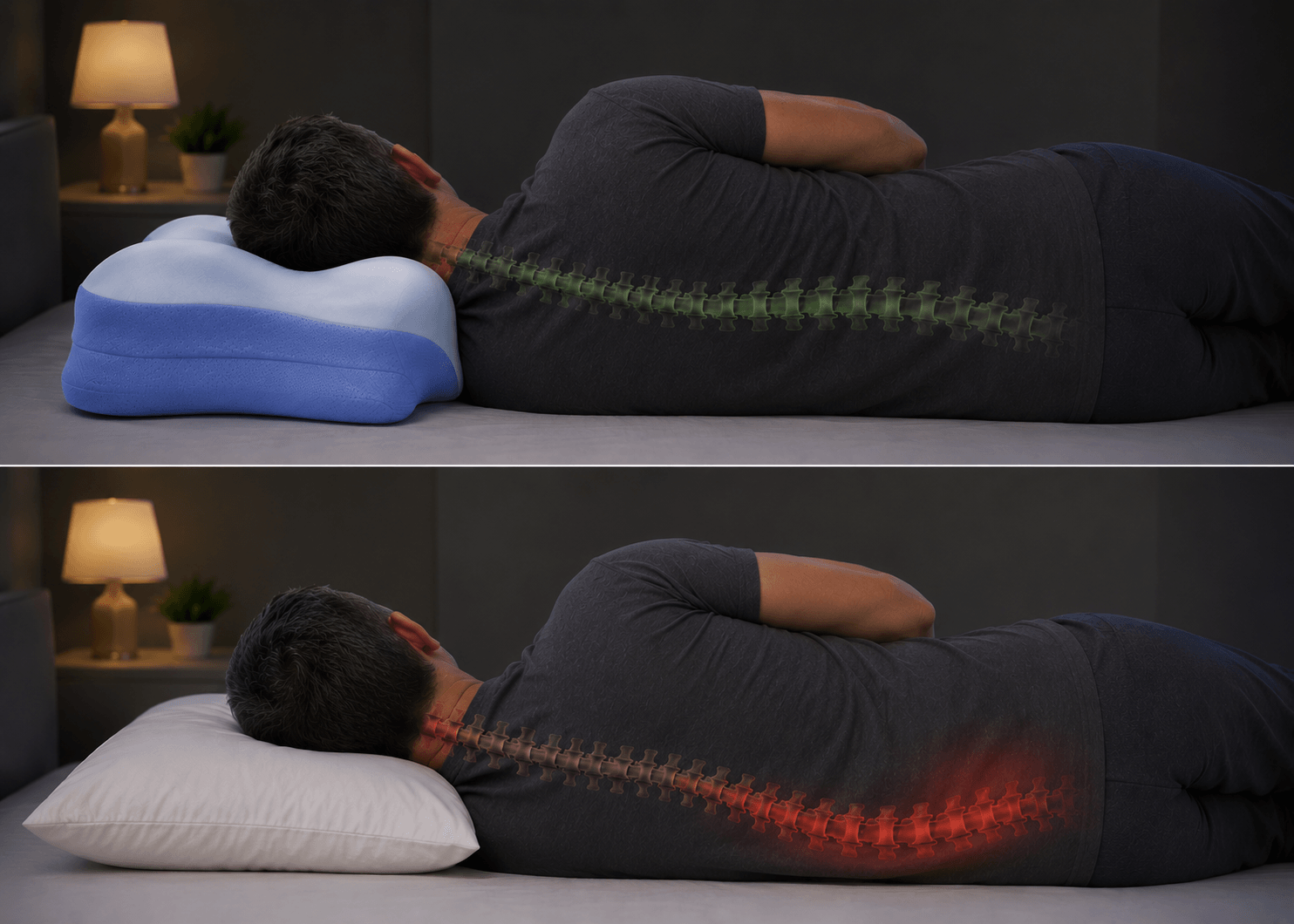
When your head, shoulders, and spine gradually shift out of alignment during the night, pressure may become unevenly distributed through different parts of the body — including the lower back area.
This may help explain why many office workers wake up feeling stiff, tight, and uncomfortable even after spending seven or eight hours in bed.
And suddenly something started making sense.
Maybe it wasn't only about how I sat during the day.
Maybe it was also about how my body was being supported during the night.
But what I hadn't understood before was how much of this problem could continue during sleep.
Most pillows — including many memory foam ones — don't actually maintain consistent support throughout the night. They compress differently as you move, change positions, and shift while sleeping.
The support your body receives when you first fall asleep can genuinely be different from the support it's receiving several hours later.
And every time your head, shoulders, and spine shift out of alignment, pressure distribution throughout your body may change with it.
I found several references to contoured support pillows specifically designed to address this — pillows with different support zones engineered to help maintain better spinal positioning whether you're sleeping on your back or on your side.
One kept appearing consistently in what I was reading and in user experiences:
Derila Ergo.
I looked through the design features.
The contoured butterfly shape.
The shoulder relief support area.
The high-density foam designed to maintain its shape.
At least in theory, it seemed to address exactly what I had been reading about: providing more consistent support and helping maintain better spinal alignment throughout the night.
Karen ordered it that same night.
4
The First Two Weeks —
Night by Night
N1
Night 1 — Not sure yet
I'll be honest: the first night I noticed nothing dramatic.
The pillow felt different — the shape takes adjustment, especially coming from a standard flat pillow.
M2
Morning 2 — I was confused
I woke up the second morning thinking I'd made another expensive mistake.
M3
Morning 3 — Something Felt Different
The third morning felt different.
I woke up and stayed in bed for a few seconds, doing what you naturally do when you've been dealing with discomfort for a long time — checking to see how your body feels before getting up.
My lower back felt different.
Not "different after stretching for ten minutes" different.
Different immediately.
I sat up slowly, almost expecting that same familiar stiffness to hit me.
It didn't.
I stood up and walked toward the kitchen without doing the usual thing I had been doing for years — stopping to stretch my lower back first.
Karen even noticed something.
She said:
"You didn't complain about your back this morning."
Honestly, I hadn't even realized it myself.
W1
End of Week 1
By the end of the first week, she was sleeping through the night consistently.
W2
End of Week 2 — I texted Janet
By the end of the second week, I was waking up before my alarm and actually feeling rested when I opened my eyes — something I genuinely could not remember experiencing in years.
5
Three Months Later — What's Actually Different
I had planned to give it a few months before deciding whether anything had really changed.
Part of me didn't want to get too excited too early. I had already tried enough things that seemed to help for a few days and then slowly stopped making a difference.
But I kept paying attention.
I started noticing that my mornings felt easier.
I wasn't waking up with that same lower back stiffness every day.
I wasn't standing up from bed already expecting discomfort.
And I wasn't constantly stretching my back every few hours like I used to.
I started realizing something else too.
Long meetings felt easier.
Long drives felt easier.
Even sitting at my desk during the workday felt more comfortable.
People around me started noticing before I fully did.
Karen asked me one morning:
"Have you noticed you haven't been complaining about your back lately?"
Honestly, I hadn't.
I'm not going to claim that a pillow magically fixed every problem.
I don't know what works for everyone.
What I do know is that several months later, I'm feeling more comfortable than I have in years.
The morning stiffness is dramatically different.
The constant tension isn't following me throughout the day.
And for the first time in a long time, I don't feel like my lower back controls my routine anymore.

The strangest thing is how I feel about going to bed now.
I used to dread waking up in the morning — wondering if I'd get out of bed feeling stiff again, wondering if my lower back would already be hurting before my day even started.
Now I actually look forward to going to sleep because for the first time in years, I wake up feeling like my body actually had a chance to rest.
That might sound like a small thing.
It isn't.
6
The Pillow I Now Recommend to Everyone
I've recommended Derila Ergo to several people since then — my brother-in-law who spends all day driving, a colleague who kept complaining about lower back discomfort after work, and two friends who spend long hours sitting at a desk and kept saying the same thing I used to say:
"I guess I'm just getting older."
I tell all of them the same thing I'll tell you:
I'm not saying this replaces medical care. If you're experiencing severe or persistent lower back pain, you should talk with a qualified healthcare professional.
But if you spend long hours sitting every day, wake up with stiffness, or feel like you've already tried different temporary solutions without lasting results, improving how your body is supported during sleep was one of the most logical changes I found.
And for me, it was the change that seemed to improve everything else.
The pillow is currently available at 70% OFF, with free shipping and a 60-day money-back guarantee.
Which means two full months to find out whether it helps improve your morning comfort — with zero financial risk if it doesn't.
Considering what years of lower back discomfort cost me in comfort, productivity, and everyday life, sixty nights felt like a very small risk.
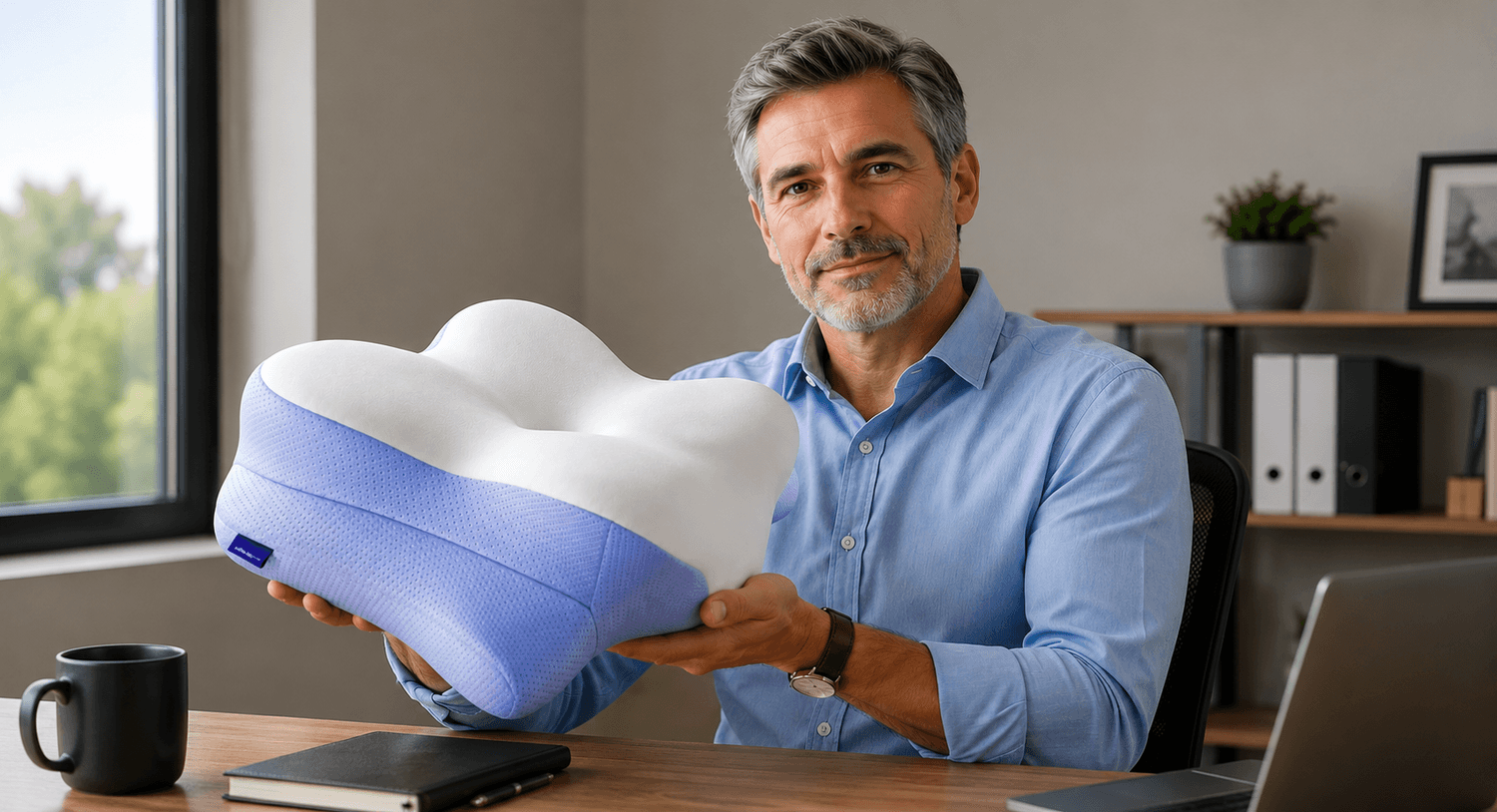
Derila Ergo Memory Foam Pillow
Ergonomic Design
High-Density Foam
70% OFF Today
60-Night Trial
Designed to help support better spinal alignment and more comfortable rest throughout the night, this pillow is currently available with a significant discount and a full 60-day money-back guarantee. Either it helps improve your morning comfort — or you return it and pay nothing.
If Long Hours Sitting Leave You Waking Up With Lower Back Stiffness Every Morning, This Is Worth Trying
The worst case: you return it and pay nothing. The best case: what happened to me.
🔒 Currently 70% OFF + Free Shipping + 60-Night Money-Back Guarantee
Still on the fence? I understand. I spent years telling myself I'd deal with it later.
The 60-night guarantee means you have nothing to lose by trying it now. Two full months. If your morning comfort, your daily routine, and your lower back symptoms don't genuinely improve — return it, pay nothing, and you're exactly where you started.
If they do improve — and based on what I discovered and my own experience, there's a real chance they might — you'll probably wonder why you waited so long.
Important: Lower back pain can have many different causes. This article reflects one person's personal experience and is not intended as medical advice. If you experience severe or persistent lower back pain, please consult a qualified healthcare professional.
✓ Free Shipping · ✓ 60-Day Guarantee · ✓ Secure Checkout
Disclosure: This post may contain affiliate links. I may receive a small commission if you purchase through my links, at no additional cost to you. My experience and opinions are entirely my own. This is not medical advice — please consult your doctor if you have chronic pain.
© 2026 emilycarterwelness.com · Independent Sleep & Wellness Research · Privacy Policy · Affiliate Disclosure